

AAIE Center for Contemporary Art (established 2015) in Rome is neither commercial gallery nor museum, but a space for creative experimentation where thought-provoking ideas and idiosyncratic practices are celebrated, often with a trans-national bridging of artists between Europe and Asia. Curated by Fanfan Yuxuan Fan, He Spoke to the Birds is a three-person exhibition where conceptualism is the overarching curatorial methodology that places highly divergent artworks and material processes in active conversation with one another, featuring art by Jeremias Rumpl (b. 1992, Leoben, Austria), Diego Azzola (b. 2000, Bergamo, Italy), and Huang Zhe (b. 1994, China).
The exhibition’s title is derived from a quote by the Italian-American art historian and writer Carolyn Christov-Bakargiev in describing Saint Francis of Assisi, a Medieval Catholic monk celebrated for his love of animals. That phrase is also germane to Arte Povera, an Italian art movement of the 1960s & 1970s that avidly held to the radical beliefs that unconventional processes and modest, non-durable materials be used over traditional mediums such as oil on canvas or sturdy marble - practically the very staple of what has defined Italian art for centuries. Fan’s exhibition looks to three young artists working from a similar disposition that could be defined as Arte Povera-adjacent, but not totally of that aesthetic philosophy, for they hold to their own individualized visual-material convictions, which Fan effectively draws out while leaving the window open for further interpretations.
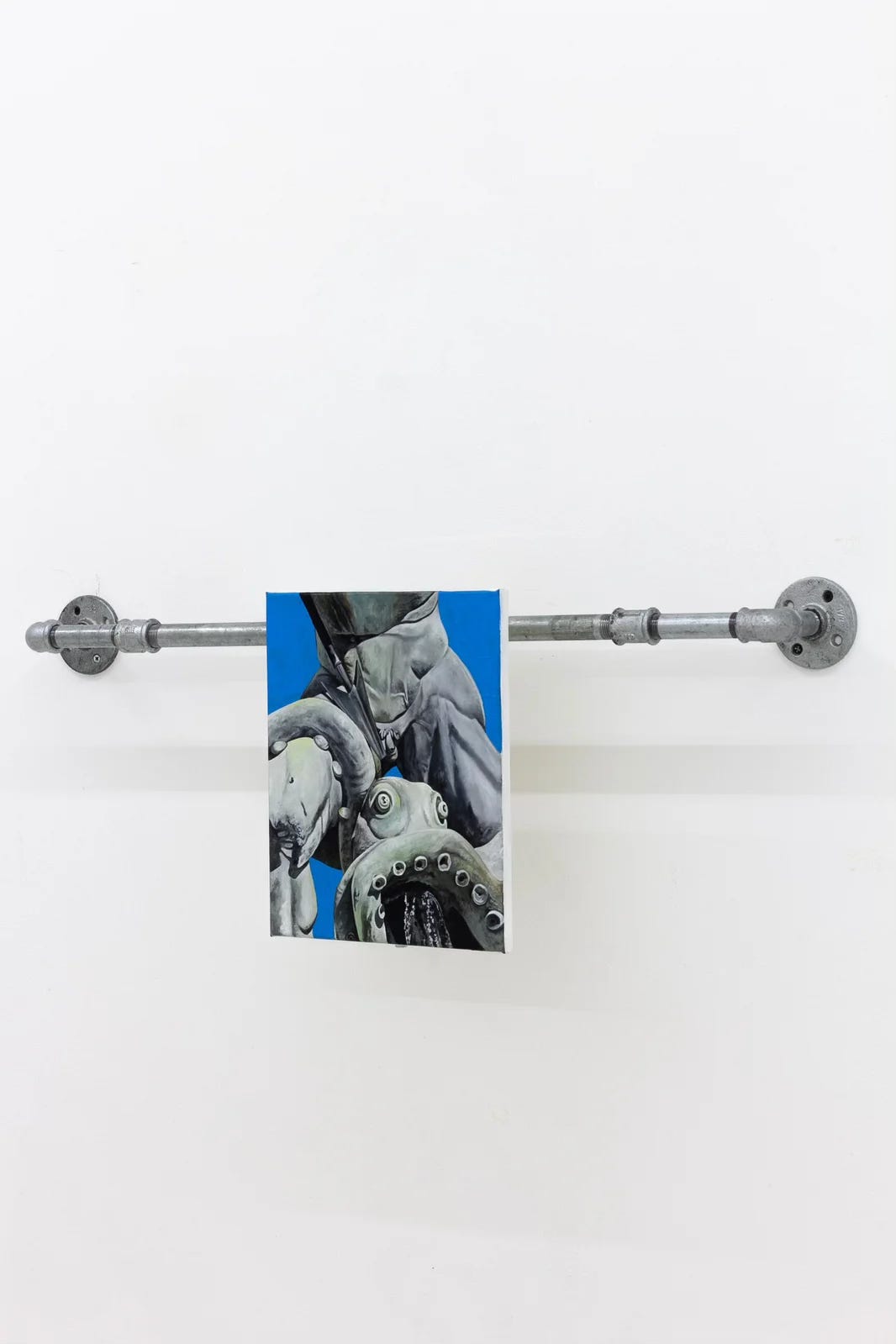
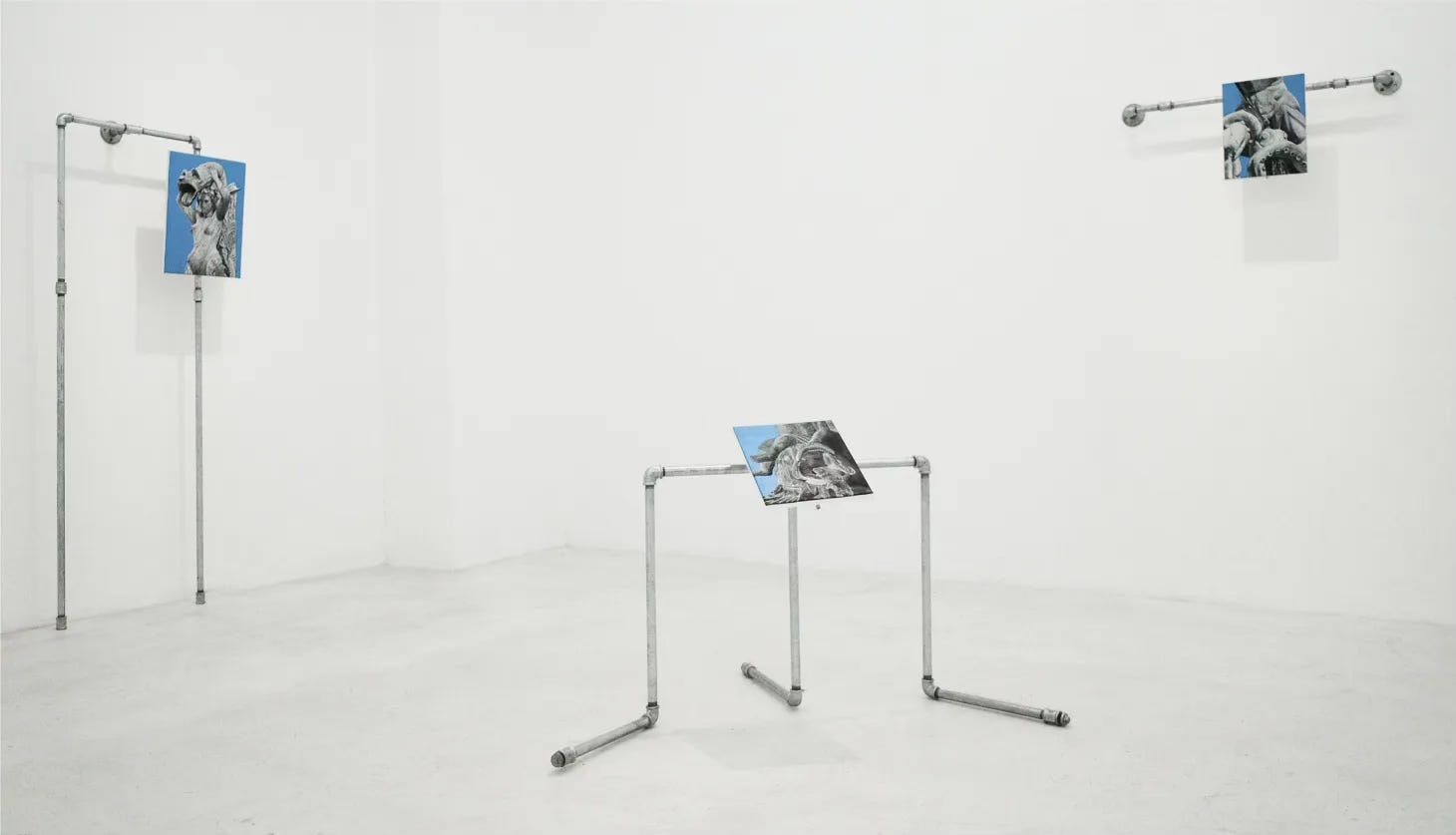
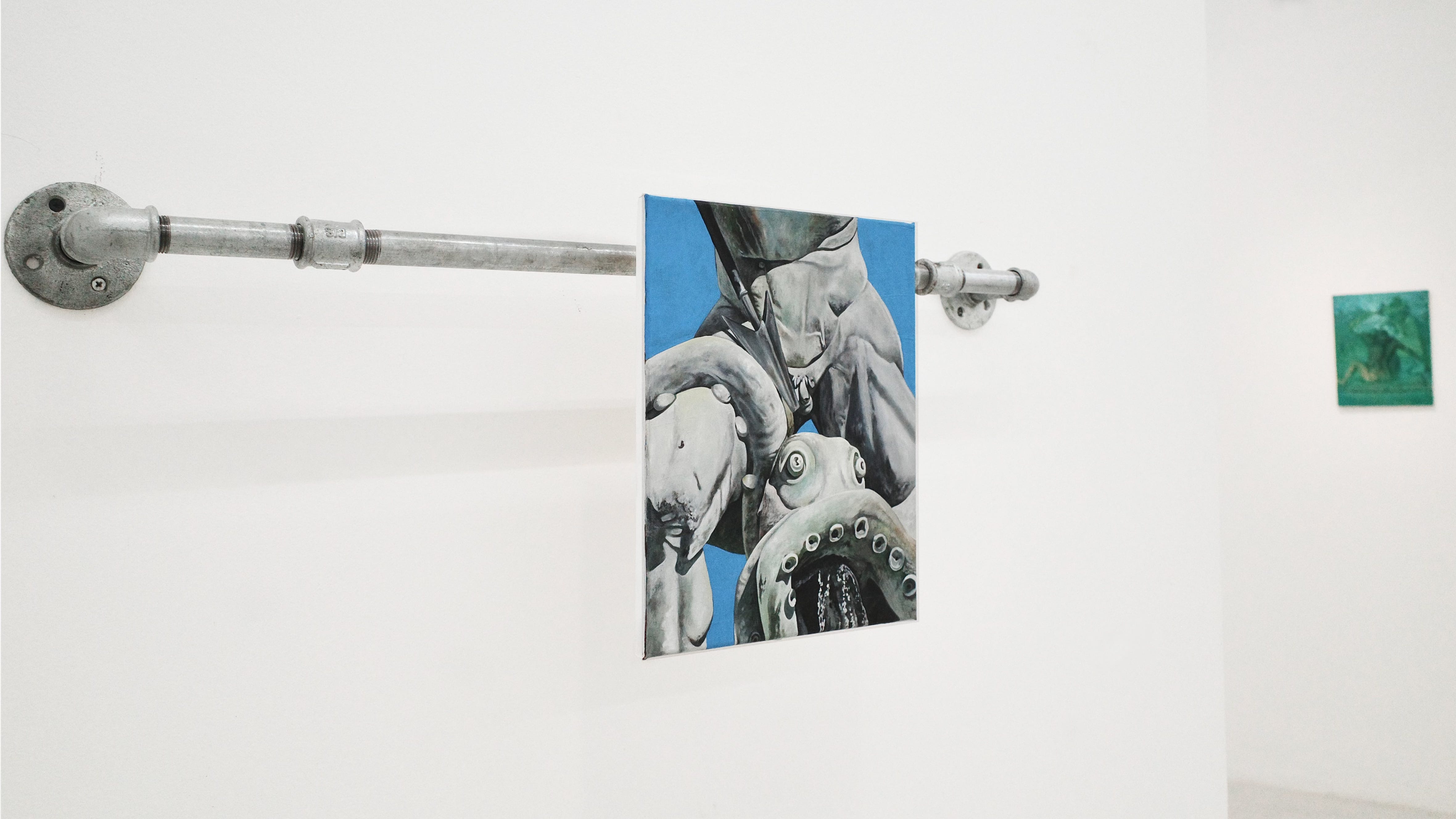
Diego Azzola’s installations are a hybrid of painting and sculpture through which realistic images of quintessentially Italian architectural and fountain ornamentation are attached to metal pipe fittings. Not a single one of these paintings are hung flatly on the wall, but are supported by the pipes, either projecting outward like a sculptural relief or askance from a freestanding, skeletal pedestal, as if it were a plaque from a memorial. This is a really spectacular example of painting being liberated from the walls - painting being given the opportunity to get more spatially involved; I should note here that my interest in seeing paintings exhibited in a way where they are less dependent on walls (at least in the most basic sense) emerged from my viewing of the incredible exhibition, The Individualism of Dona Nelson at CANADA Gallery in Tribeca at the beginning of the year, where her abstract paintings were exhibited freestanding or suspended from the ceilings. And thus, Azzola’s works are a rather vocal demonstration of how painting can present itself outside of conventional standards.
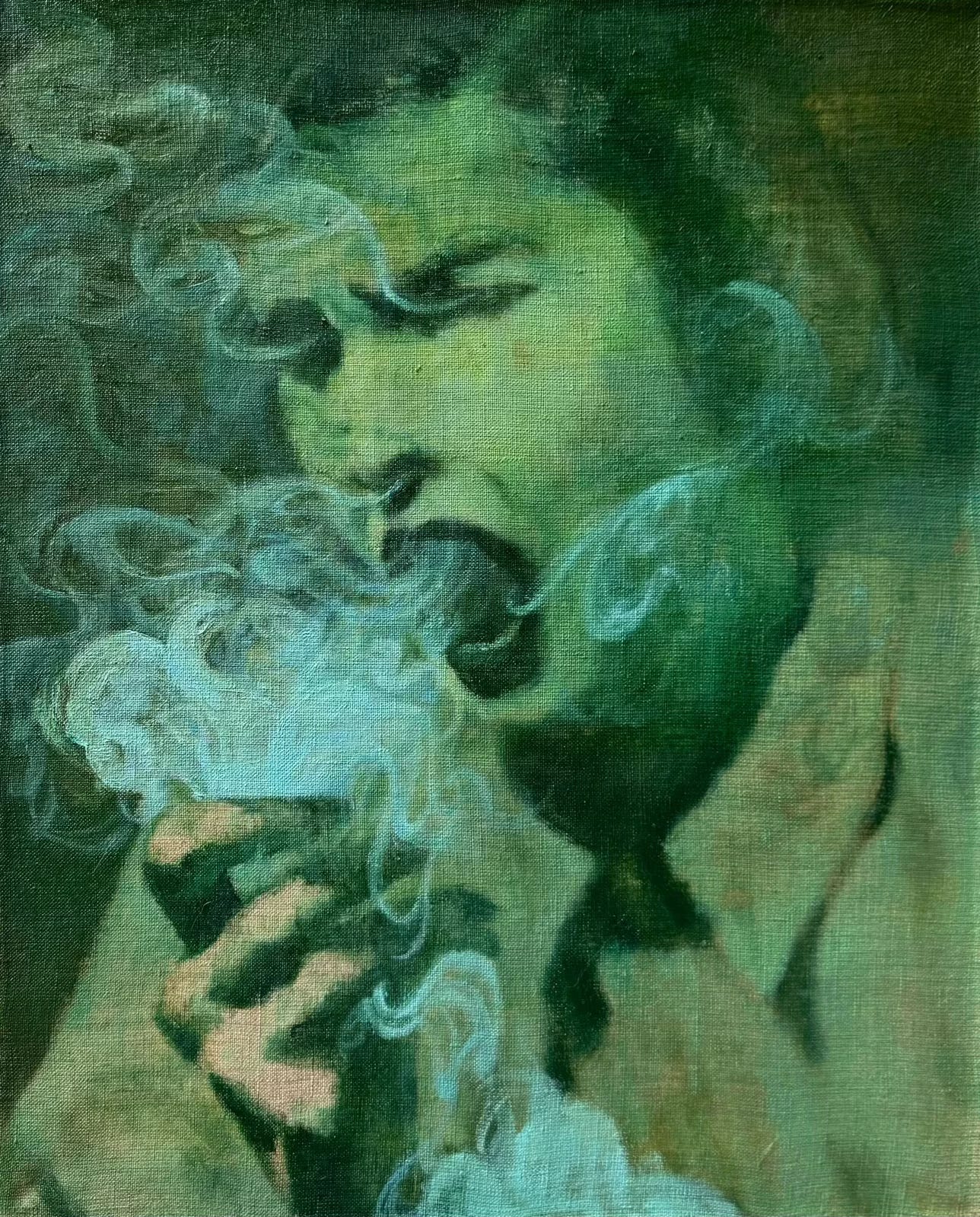
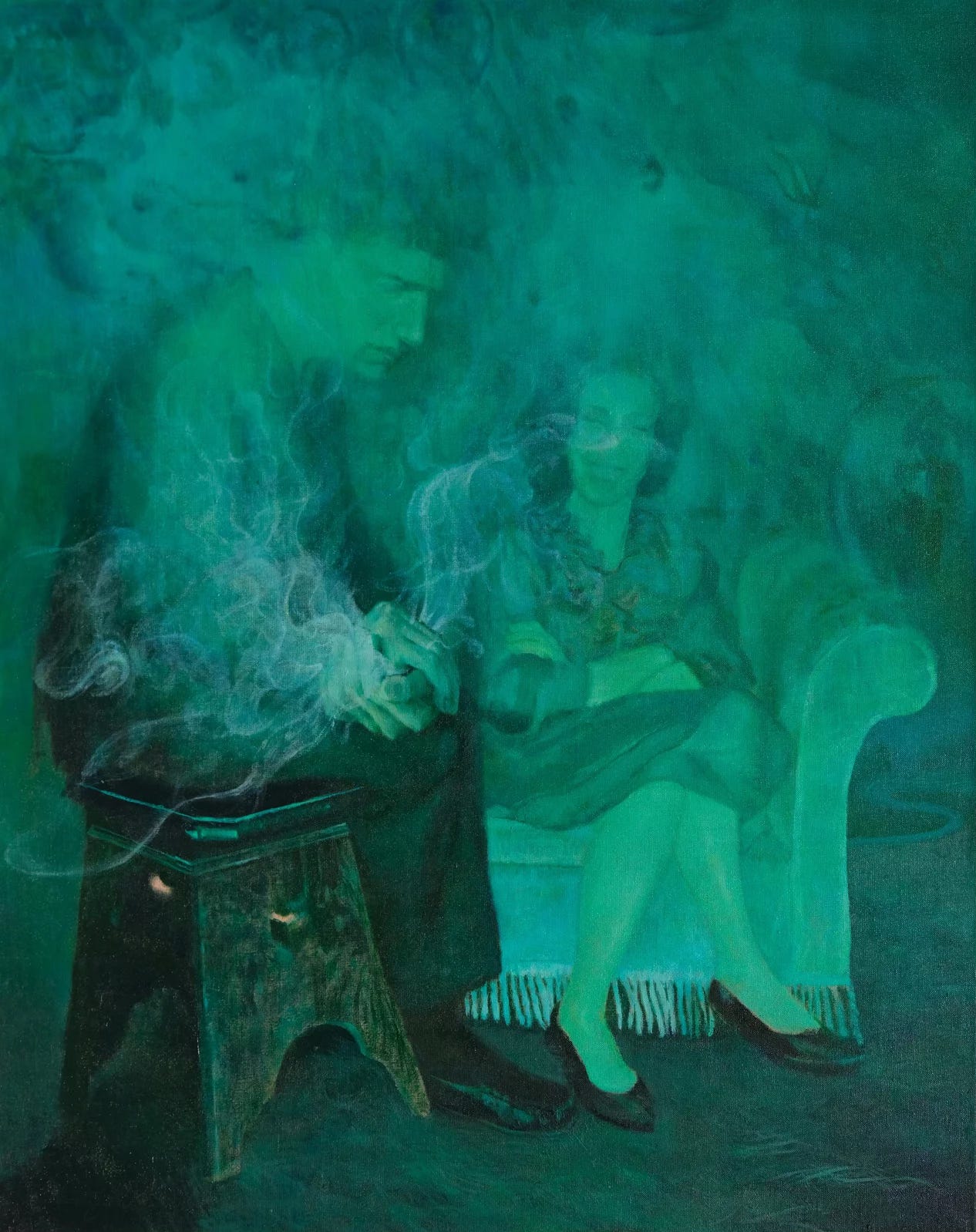
Huang Zhe’s oil on linen paintings are all about obfuscation. Rendered in a darkened absinthe green coloration, figures oscillate between recognition and dissipation as clouds of smoke partially veil our view. The figures in each image are in the middle of an action - singing, conversing, and, of course, smoking - to the point where one could postulate if these images were based on photographs that have since been reinterpreted through a painterly lens, maybe even worked from memory of a past event or a dream sequence.
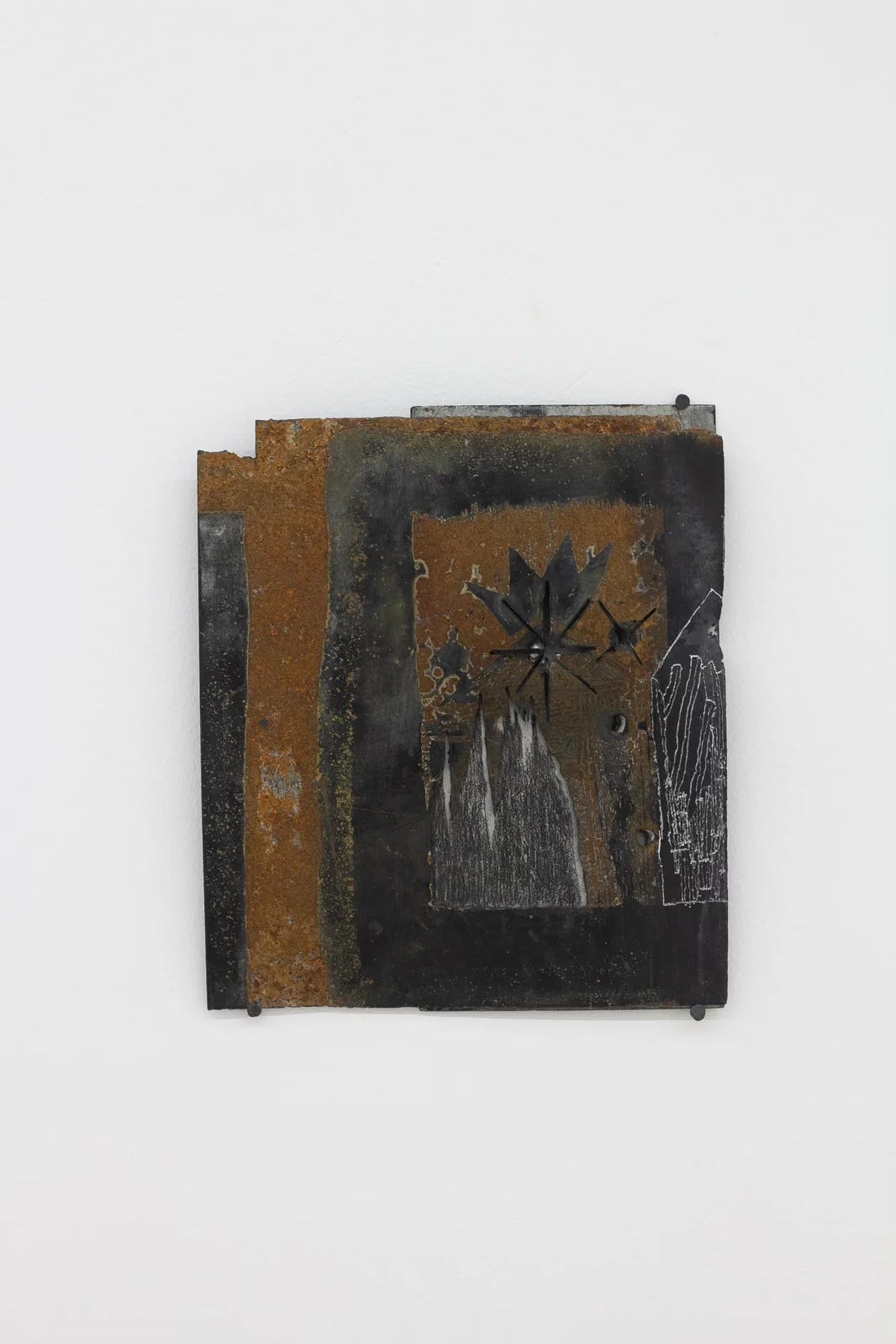
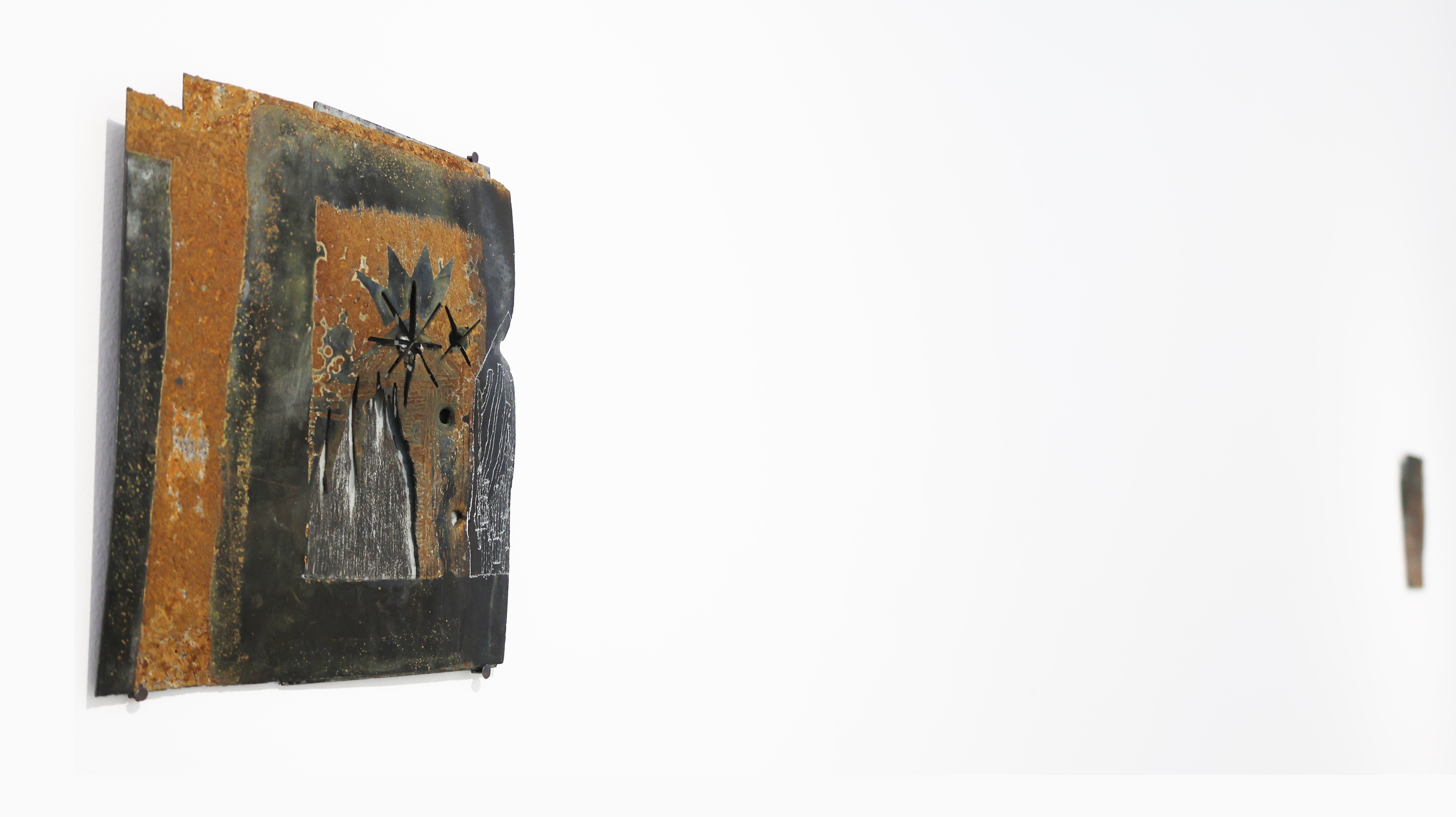
Jeremias Rumpl’s zinc plates are the result of images directly transferred from the artist’s sketchbooks onto the plates which then undergo a multi-tier process of acid etching, welding, and weathering, eventually triggering a corrosive effect. Rust is the natural byproduct of this process, hence why Rumpl’s soldered zinc plates have an aged look about them, nearly making one believe they are looking at the salvaged remnants of damaged, yet surviving decorative tiles.
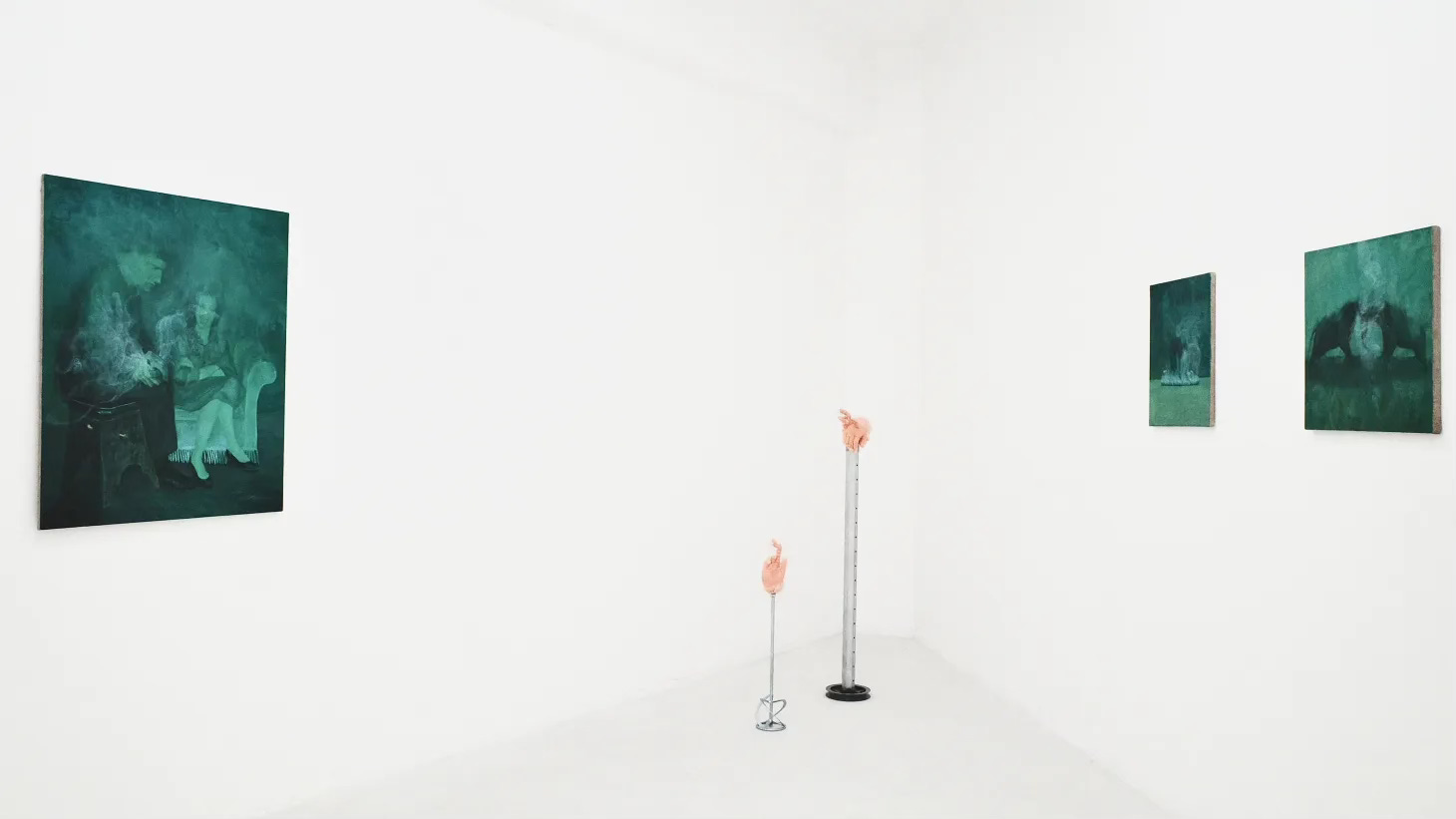
These works are radically different from each other, so what is it that unites them? Fan noticeably picks up on an unusual commonality between these three artists: an intentional paucity of subject matter or contextual data within their pieces. The artists have given us a challenge - a worthy one at that - in deciphering or extracting meaning from them. Azzola’s installations feel more inclined to architectural design based on their hinged placements within the gallery, really maximizing their relationships with wall, floor, and even the air between the open forms of the pipes. Rumpl’s zinc plates hang from the walls, but are spaced out from each other in uneven gaps. Possibly kindred spirits, Rumpl and Azzola’s works are fragmentary in appearance, suggestive of being once part of a much more cohesive whole that has become deconstructed and distorted, only leaving behind a trace of something else. Zhe, whose works are the most visually narrative in this exhibition, seems to grapple with these ideas in which content and meaning becomes confused or hidden away through a smoky veneer - either seen as a literal covering over of a scene or a metaphorical blank in one’s memory.
As if taking a page out of Arte Povera, Fan’s curation eschews conventional hanging and placement of works, but rather defers to the architecture of the space and how it enables the works to “speak”. Spatial proximity - closeness and distance - are emphasized within the stark white of the gallery where some works are edged close with one another, while others are isolated or sequestered away into their niche spaces. That alone is a detail which denotes the works are not just functioning as separate entities, but interconnected in a larger dialogue.
Fan’s curation is clever in situating artists whose works seem so unrelated, yet unexpectedly have more in common than what is perceived at first glance. This is where conceptual art and conceptual exhibitions become - dare I use the word - “fun”. I mean this in the sense that they encourage a much deeper and focused looking that does not disengage from the aesthetic qualities of the art, but asks of us to take into account themes, symbolism, iconography, semiotics, the space itself, and so forth. Sometimes shows of this intellectual rigor can leave one - and I will include myself - with a feeling of “my brain hurts” and mental exhaustion. Miraculously, Fan’s exhibition does not do that as it feels uncomplicated by heady and excessive theoretical ideas. When you read the press release (which I summarized in the briefest of terms towards the beginning), it is pretty straightforward along with the detailed descriptions on each artist’s works. Fan’s curation does not demand too much of us, only that we step into the space and determine what it is that puts these works in communion with one other. Just like the artists of Arte Povera or the modesty of St. Francis (who spoke to the birds), Azzola, Rumpl, and Zhe vie for economical and restrained works that belie a vast wellspring of ideas.
Reviewing from afar is such an interesting constraint to be upfront about, most critics pretend distance doesn't change how they read a show. Would be curious how you decide what to trust from installation shots alone.